India is one of the world's most varied honey origins. Its climate zones produce everything from light, mild litchi and clover honey to dark, robust forest honeys.
For an importer, though, variety is only half the story. Purity testing, export rules, documents and packing decide whether a container clears customs and sells as planned.
This guide explains what international buyers should know before working with a Honey Exporter India. It covers the honeys India offers, the tests that matter, the paperwork that travels with a shipment, and how to judge an Indian supplier before you send a purchase order.
Why International Buyers Source Honey from India
India produces honey across very different regions, from the plains of Punjab and Haryana to the forests of the northeast. That range gives buyers access to many floral sources from a single origin country.
For importers, packers and food manufacturers, this means one supplier relationship can cover several product lines. A blender can source a mild multiflora for volume and a single-flower honey for a premium range.
Popular Indian Honey Varieties for Export
These varieties are commonly requested by overseas buyers:
Mustard honey: light to golden, pungent, and quick to crystallise. Often used in creamed honey.
Litchi honey: light colour with a floral, fruity aroma. Popular for retail jars.
Multiflora honey: balanced sweetness that varies with the season. A common choice for industrial use.
Eucalyptus honey: bold aroma, medium to dark colour.
Sidr honey: darker, aromatic and robust. In steady demand in Gulf markets.
Wildflower, black forest and clover honey: used for specific flavour or market preferences.
Ask for samples of each variety you are considering. Colour and taste change by season and region, so approve a sample before you lock a specification.
What to Check Before You Buy: Purity and Quality Testing
Honey is one of the most frequently adulterated foods in world trade. Overseas buyers face real risk if a lot contains added sugar syrups.
The international reference point is the Codex Alimentarius Standard for Honey (CXS 12-1981). It does not permit food additives in honey and sets out basic composition and labelling rules. Many national standards are built on it.
NMR Tested Honey from India
Nuclear Magnetic Resonance (NMR) profiling compares a honey's molecular fingerprint against reference databases. It is used to screen for syrup adulteration that simpler tests can miss.
India made NMR testing mandatory for honey exported to the United States from August 2020. Many European retailers and importers also ask for NMR reports, even where the law does not require them.
When you work with a Honey Exporter India, state in the purchase order whether you need an NMR report, and from which laboratory.
Other Tests to Request
Depending on your market and use, ask for:
Moisture content, to judge fermentation risk
HMF (hydroxymethylfurfural), which signals heat damage or age
Diastase activity
Antibiotic and pesticide residue screening
Sugar profile and C4 sugar tests
Pollen analysis when you buy a named floral variety
Honey Export Documents from India
Paperwork is where many first shipments go wrong. Agree the full document list before production starts, not after the container is booked.
A typical export file includes:
Commercial invoice
Packing list with lot numbers for each variety
Certificate of analysis or test summary named in the purchase order
Certificate of origin
Bill of lading or airway bill
Market-specific add-ons, such as Halal certification for some Gulf buyers or True Source documentation for some US programmes
Your importer or customs broker decides the final list. Indian honey export requirements meet only one side of the trade. The destination country's rules decide the rest.
Know India's Minimum Export Price
India sets a Minimum Export Price (MEP) on natural honey. Under DGFT Notification 09/2026-27, the MEP is US$1,400 per metric tonne FOB, valid until 31 December 2026. Shipments below that price are not permitted.
For buyers, this sets a floor on FOB quotations for natural honey. A quote far below it is a warning sign. Check for a newer notification before you rely on this figure after December 2026.
Destination-Country Rules
Each market adds its own requirements. Some examples:
United States: imported food must meet FDA rules, including food facility registration and prior notice of shipments. Indian raw honey has also been subject to US anti-dumping duties, so check current rates with your broker.
European Union: honey can only enter from countries and establishments approved under EU residue-monitoring and import rules. Confirm current eligibility before you contract.
Gulf markets: buyers may ask for Halal certification and, in some cases, registration with local food authorities.
Bulk Packaging and Shipping Options
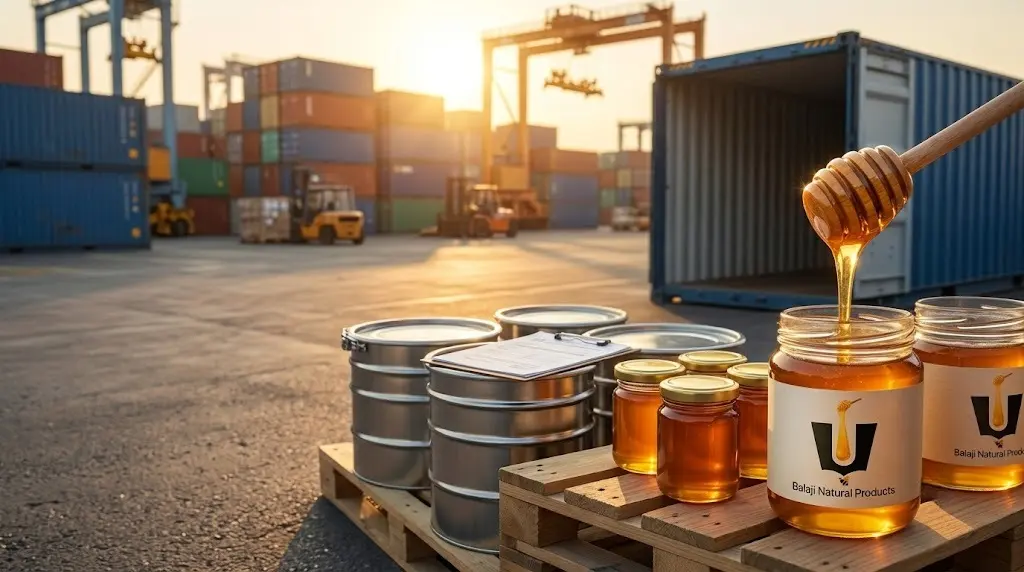
How honey is packed affects cost, handling and product quality on arrival. A Bulk Honey Supplier India should offer packs that suit your filling line and storage.
Common formats include:
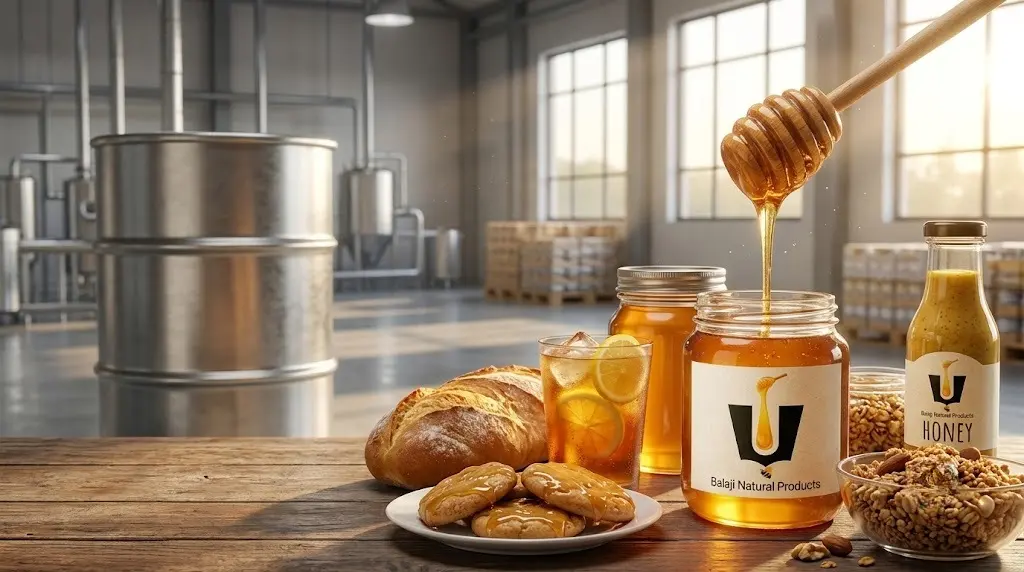
Steel or food-grade drums (around 300 kg): the standard for industrial buyers and packers
Cans (around 50 to 65 kg): easier to handle for smaller operations
Buckets: suited to food service and small manufacturers
Glass or PET jars: for private-label retail programmes
Shipping Considerations
Honey is shipped by sea in most cases. Discuss these points before booking:
Incoterms (FOB, CIF or another basis)
Lead time for production and packing
Whether one container can carry several varieties as separate, identified lots
Pallet configuration and drum lining
Temperature exposure in transit, which can speed crystallisation or raise HMF
How to Evaluate a Honey Supplier India for Export
Not every Honey Supplier India is set up for export. Domestic wholesale and international trade need different documents, packing and testing.
When you compare suppliers, look at the following.
Manufacturer or Trader?
Buying from a Honey Manufacturer India with its own processing plant gives you more control. You can ask how lots are kept separate, how honey is filtered and heated, and how batches are traced back to source.
Traders can be useful, but ask who processes the honey and whether you can see the plant's credentials.
Certifications and Audits
Check which food safety certifications cover the plant. Common ones include FSSC 22000, BRCGS, ISO 9001, HACCP and SQF. Ask for current certificates, not logos on a brochure.
Remember that plant certification is not the same as destination approval. Your import protocol still decides which lot papers must travel with each container.
Communication and Transparency
A reliable exporter will:
Confirm pack, price basis, Incoterms and lead time in a written quotation
Share sample and specification approval before production
Name the tests in the contract and supply the reports
Tell you plainly when a document or certificate is not available for a lot
Practical Steps: How to Import Honey from India
If you are placing your first order, follow this sequence:
1.Define your specification. Variety, colour range, moisture limit, pack and quantity.
2.Check your market's rules. Confirm import eligibility, duties and documents with your customs broker.
3.Shortlist exporters. Ask for plant certificates, sample lots and test reports.
4.Approve samples. Lock colour and flavour before production.
5.Agree the contract. Price basis, Incoterms, tests, documents and lead time in writing.
6.Test on arrival. Run your own verification test on the first shipments, even with supplier reports in hand.
Conclusion
Indian honey gives international buyers a wide range of floral varieties, flexible bulk packs and established export routes.
The key to a smooth shipment is preparation. Agree your specification, test requirements and document list early. Check India's MEP and your own country's import rules. And choose a Honey Exporter India that manufactures the honey itself, documents every lot and communicates clearly.
Balaji Natural Products processes honey at its plant in Sonipat, Haryana, and supplies bulk drums, cans and private-label jars to importers in the USA, the UAE and other markets. Tell us the variety, destination and estimated quantity, and request a quotation for your next shipment. [Contact: https://www.balajinatural.in/contact ]