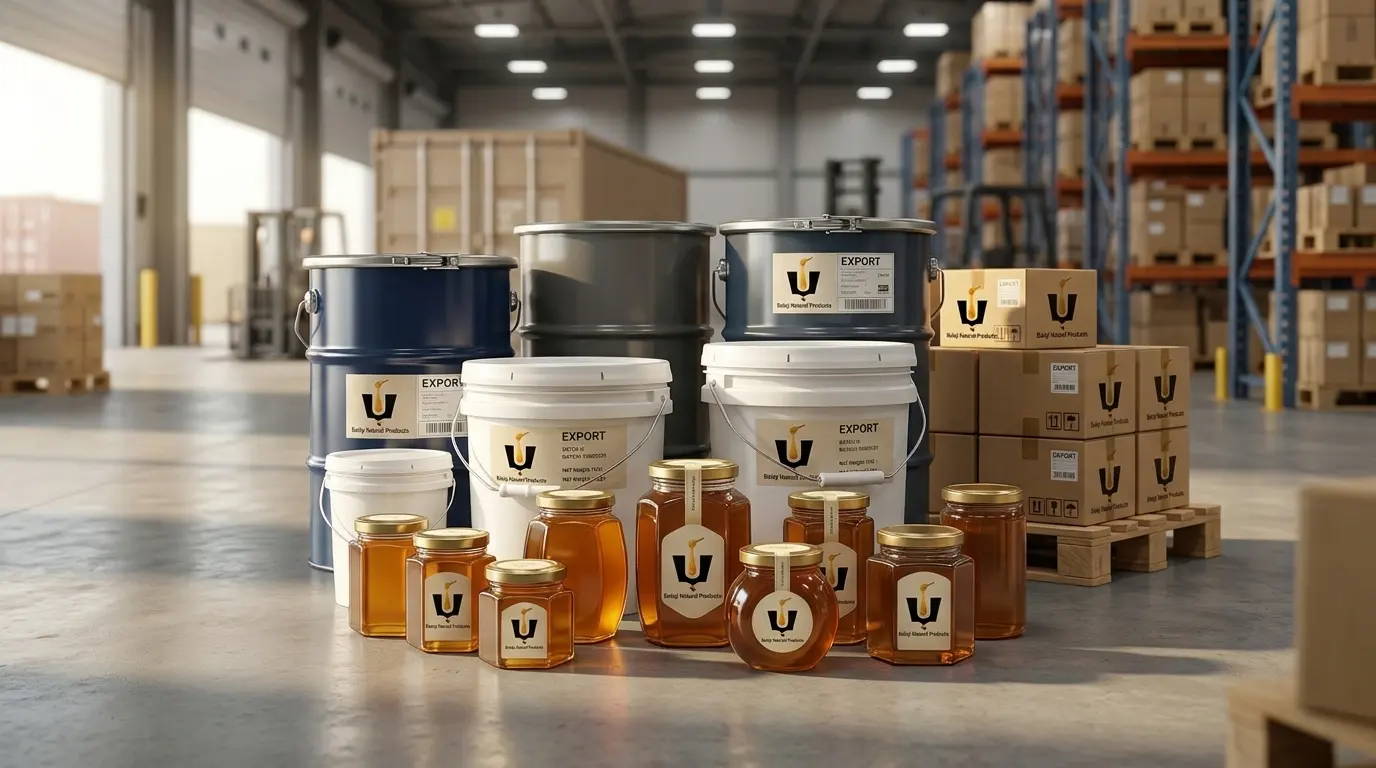
A bulk honey order is a big commitment. Once several drums reach your plant, it is costly and slow to reject them if the colour, taste or purity is wrong.
That is why experienced buyers test samples first. Before you place an order with a Bulk Honey Supplier India, a structured sampling process lets you confirm quality, compare suppliers and set a clear standard the bulk lot must match.
This guide shows how to test honey samples before buying, step by step, from requesting the right sample to checking the final shipment.
Why Honey Sample Testing Matters
Honey is a natural product. Colour, flavour, moisture and crystallisation can vary by season, region and floral source, even from the same supplier.
A tested and approved sample helps you:
Confirm the honey suits your product, whether it is going into bread, beverages or retail jars
Check purity and quality before money and production time are committed
Compare suppliers on the same basis
Set a reference the bulk delivery must match
Resolve disputes quickly if a delivery differs from what you approved
Step 1: Define Your Specification First
Decide what you need before you ask for samples. A clear specification makes samples easier to judge and quotes easier to compare.
Your specification should cover:
Honey variety, such as multiflora, mustard or a named floral type
Colour range your product needs
Physical form, liquid or crystallised
Key quality limits, such as maximum moisture and HMF
Required tests, including whether you need NMR
Pack format and estimated quantity
Destination market, since export buyers may need extra tests
Step 2: Request the Right Samples
A sample is only useful if it represents the honey you will actually receive.
When you request samples from a Honey Supplier India, ask for:
A representative sample from the lot or harvest being offered, not a showroom jar
Enough quantity for sensory checks, lab tests and a retained reference portion
Sealed, labelled containers showing variety, lot number and sampling date
The supplier's own certificate of analysis for the same lot
If you are comparing several suppliers, request samples at the same time and ask for the same information from each.
Step 3: Receive and Record Each Sample
Careful handling keeps your results reliable.
When samples arrive:
1.Check the seal and packaging for damage or leaks.
2.Record details, including supplier, variety, lot number and date received.
3.Split each sample into portions: one for sensory checks, one for the laboratory and one to keep as a retained reference.
4.Store samples in a cool, dry place away from strong odours and direct sunlight.
Do not heat samples before sending them for HMF or diastase tests. Under the Codex method notes, samples for these tests are prepared without heating, because heat changes both results.
Step 4: Evaluate the Sample by Sight, Smell and Taste
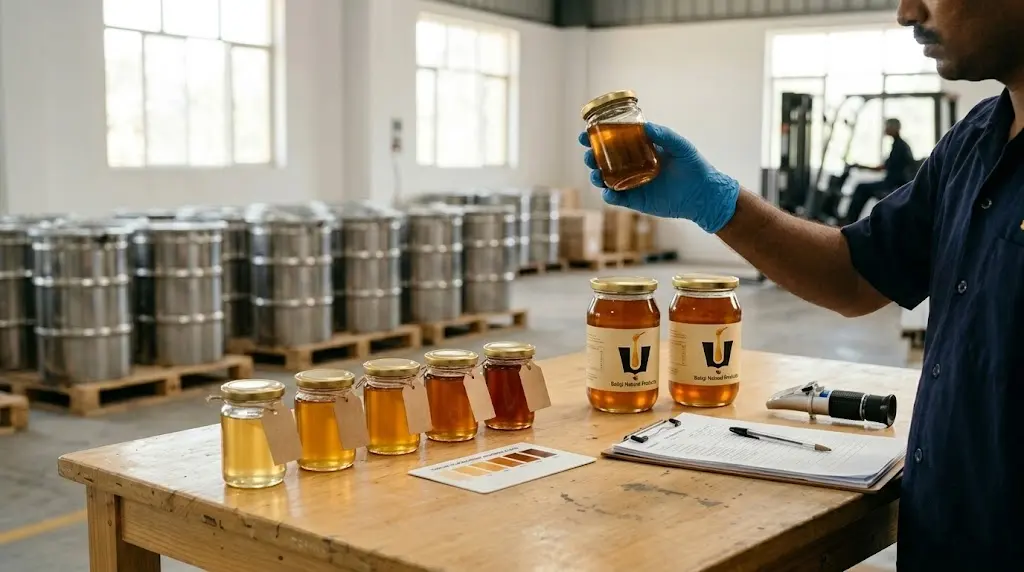
A sensory check is quick and can rule out unsuitable samples before you pay for lab tests.
What to Check
Colour: does it match the colour range you need?
Clarity: is it free from visible foreign matter?
Aroma: does it smell clean and typical of the variety, without sour or fermented notes?
Taste: is the flavour right for your product, without off-flavours or a burnt note?
Texture: is the thickness and crystallisation as expected?
Signs of fermentation: foam, bubbles or a sour smell can mean high moisture
Sensory checks cannot prove purity. Modern adulterants can look and taste like honey, so always follow up with laboratory testing.
Step 5: Send Samples for Laboratory Testing
Use an independent, accredited laboratory. In India, look for labs accredited by NABL for the specific honey tests you need.
Common tests for bulk buyers include:
Moisture content, for fermentation risk and ripeness
Sugar profile, including fructose, glucose and sucrose
HMF and diastase, for heat damage and freshness
C4 sugar test, for corn or cane syrup
Rice syrup marker (2-AFGP) and foreign oligosaccharides, for rice and starch syrups
Proline and pollen count, for authenticity
Antibiotic and pesticide residues, especially for export
NMR profiling, for premium, private-label or export lots
India's FSSAI honey standard sets limits for many of these parameters. For an explanation of each test and the adulteration it detects, see our guide to honey adulteration in India.
How to Read a Honey Certificate of Analysis
When you receive lab results, or the supplier's certificate of analysis, check that:
The lot number matches the sample and the lot offered for sale
The laboratory is named and its accreditation is stated
Test methods are listed for each parameter
Results are shown against limits, not just marked "pass"
The report is recent and dated after sampling
Compare the supplier's certificate with your independent results. Large differences are a warning sign.
Step 6: Run a Trial in Your Own Application
Lab results tell you the honey is genuine. A trial tells you it works in your product.
Run a small production trial and check:
Flavour in the finished product
Colour and browning during baking or heating
Mixing, pumping and dissolving behaviour
Shelf life or texture changes over time
Step 7: Approve and Document the Sample
When a sample passes, record your approval in writing:
The approved specification and test results
The retained reference sample, labelled and stored safely
The colour band or range you accept
The tests that must accompany each future lot
A retained sample or a written colour band is much safer than asking for honey "the same as last time". Include these in your purchase order or supply contract.
Step 8: Pre-Shipment Honey Testing and Arrival Checks
Sample approval is not the end of the process. The bulk lot must match what you approved.
Before Shipment
Ask the supplier for a sample and certificate of analysis from the actual production lot before dispatch. A reliable Honey Manufacturer India will keep its own retained samples from each lot for later comparison.
For overseas orders, a Honey Exporter India should share pre-shipment test results, including NMR where your contract requires it, before the container is loaded.
On Arrival
Check seals, lot marks and container condition
Draw samples from several drums or cans, not just one
Compare colour, aroma and taste with your retained sample
Run key lab tests on the first deliveries from any new supplier
Common Sampling Mistakes to Avoid
Approving on taste alone, without lab testing
Testing a sample that is not from the offered lot
Heating samples before HMF or diastase testing
Not keeping a retained sample for future comparison
Skipping arrival checks because the supplier sent a certificate
Conclusion
Honey sample testing protects your product, your budget and your brand. Define your specification, request representative samples, check them by sight and taste, confirm purity in an accredited laboratory, and trial them in your own application.
Then document the approved sample and check that every bulk lot matches it. Working with a Bulk Honey Supplier India that supports this process makes each order faster and safer.
Balaji Natural Products supplies samples when colour or flavour must match, and names the required tests, including NMR when ordered, in the contract for each lot. Request a sample and quotation for your next order.
[Contact Us: Balaji Natural Honey]