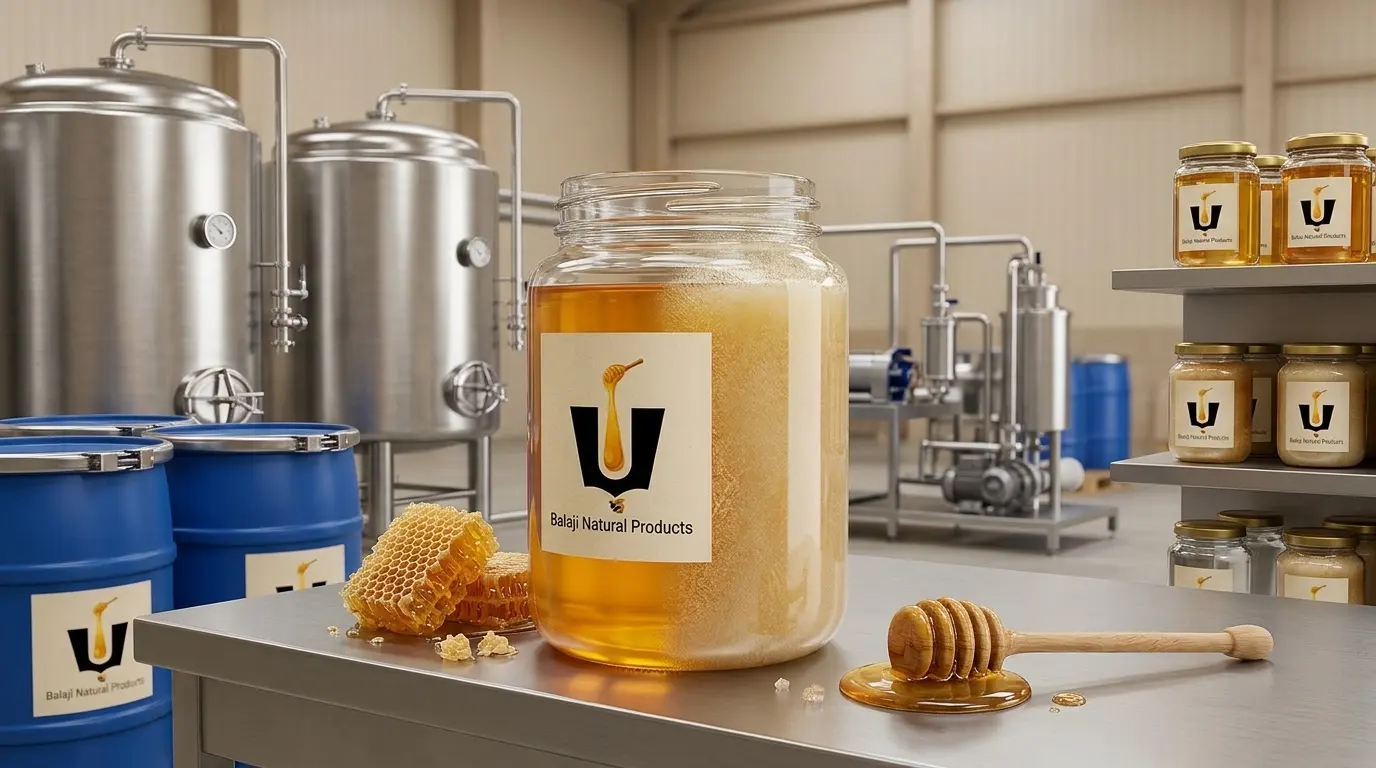
Honey packaging is much more than placing a natural product inside a container. It plays an important role in protecting product quality, maintaining freshness, ensuring safe transportation, and meeting international buyer expectations.
For every Honey Exporter in India, choosing the right packaging is essential for successful international trade. Buyers expect honey to arrive without contamination, leakage, moisture exposure, or changes in its natural characteristics.
India supplies honey to international markets, including the USA, UAE, and Europe. However, entering these markets requires more than competitive pricing and quality products. Exporters must also ensure that their packaging practices meet applicable food safety standards and destination-market requirements.
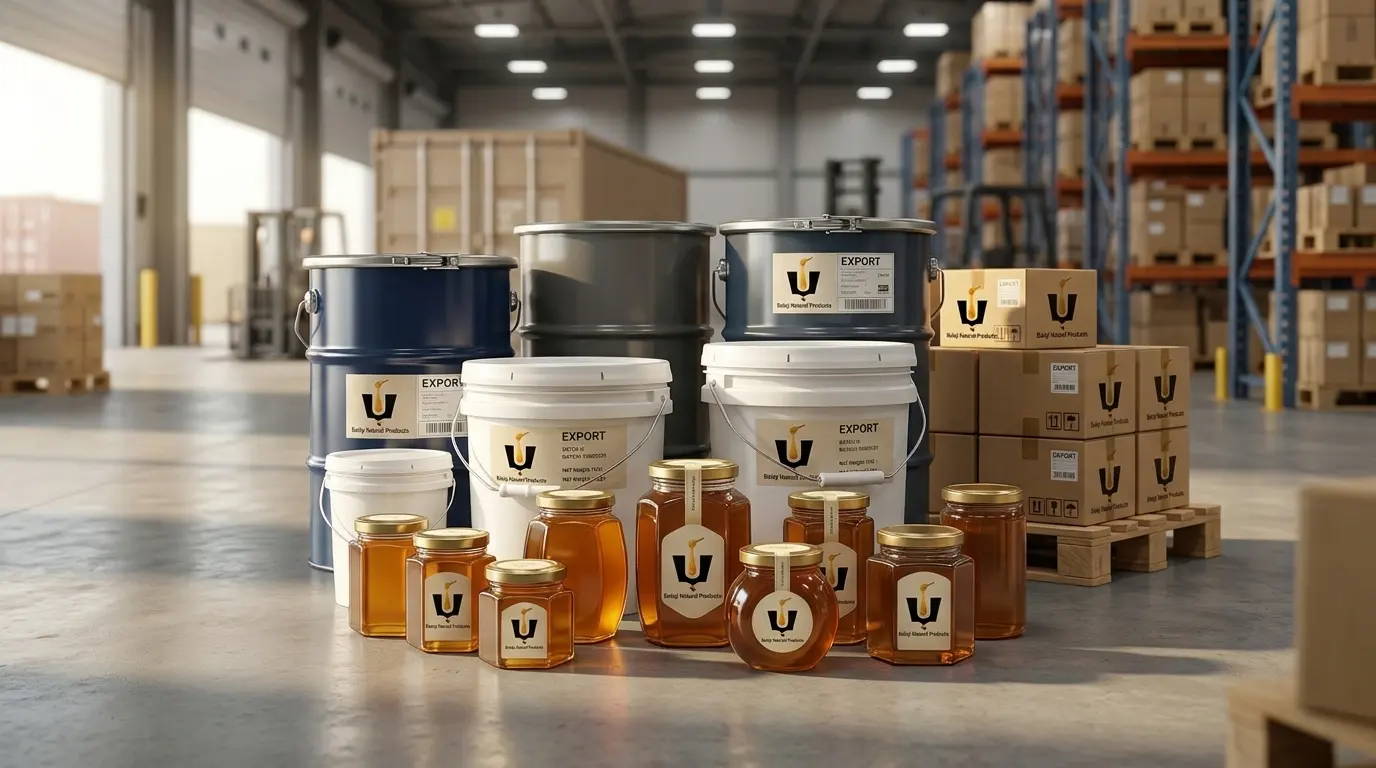
Whether honey is supplied in retail jars, food-grade buckets, cans, or industrial drums, appropriate packaging helps build buyer confidence and supports long-term business relationships.
Why Honey Packaging Matters for International Exports
Honey has a naturally long shelf life when properly processed, stored, and handled. However, unsuitable packaging can expose it to moisture, contamination, unwanted odours, and handling-related damage.
Good packaging helps:
Protect honey from external contamination.
Reduce unwanted moisture exposure.
Prevent leakage during transportation.
Maintain product integrity during storage.
Support hygienic handling throughout the supply chain.
Preserve product quality during international shipments.
Packaging also creates a strong first impression. Clean containers, secure seals, and accurate labels demonstrate that the manufacturer understands quality management and export requirements.
Choosing the Right Honey Packaging Materials
Different international buyers have different packaging preferences depending on their order quantities, intended applications, and storage facilities.
A reliable Honey Manufacturer in India should offer suitable packaging options based on the buyer's commercial and operational requirements.
1. Food-Grade Plastic Buckets
Food-grade plastic buckets are commonly used for bulk honey storage and transportation. They are suitable for bakeries, food manufacturers, commercial kitchens, and distributors.
Their advantages include:
Lightweight and easy handling.
Availability in different capacities.
Convenient storage and transportation.
Practical stacking when appropriately designed.
Exporters should verify that containers are suitable for direct food contact and do not transfer unwanted odours, flavours, or substances into honey.
2. Epoxy-Coated Metal Drums
Epoxy-coated metal drums are widely suitable for large-volume industrial honey requirements when their internal coatings meet applicable food-contact standards.
They are particularly useful for food manufacturers producing bakery products, beverages, cereals, confectionery, sauces, and other processed foods.
The internal coating should be compatible with honey and the intended storage conditions. Exporters must also inspect the coating and ensure that drums are properly sealed before dispatch.
3. Glass Containers for Retail Packaging
Glass jars are popular for premium and retail honey products because they allow customers to see the honey's natural colour and appearance.
Key advantages include:
Excellent product visibility.
Non-porous packaging surface.
Premium product presentation.
Availability in different shapes and sizes.
However, glass is heavier and more fragile than alternative materials. Exporters should use protective cartons, dividers, and cushioning to minimise breakage during transportation.
4. Food-Grade Cans
Food-grade metal cans are another packaging option for certain bulk and commercial requirements.
The material, internal coating, closure system, and container specifications should be verified for suitability before use.
A professional Honey Exporter India should confirm packaging preferences with the importer before preparing the shipment.
Understanding International Honey Packaging Standards
Packaging requirements vary depending on the importing country, product category, and whether honey is intended for retail or industrial use.
Indian exporters should understand applicable domestic regulations and destination-market requirements.
Indian Food Packaging Regulations
In India, food packaging must comply with applicable Food Safety and Standards Authority of India (FSSAI) regulations.
The Food Safety and Standards (Packaging) Regulations, 2018 establish requirements for food-contact packaging materials. Exporters should ensure that their packaging is appropriate for the product and expected storage conditions.
Reference: FSSAI Official Website.
International Labelling Guidelines
The Codex Alimentarius Commission provides internationally recognised food standards, including the Standard for Honey (CXS 12-1981).
It covers relevant provisions relating to honey identification, quality, hygiene, and labelling.
Exporters should review applicable requirements when preparing retail and bulk honey shipments.
Reference: Codex Alimentarius.
Destination-Specific Requirements
A Honey Exporter in India should not assume that one packaging design is suitable for every international market.
USA: Check applicable FDA food-contact packaging requirements, imported food regulations, and labelling provisions.
UAE: Confirm applicable UAE and GCC food packaging requirements, including Arabic labelling where required.
Europe: Review applicable food-contact material, packaging, and labelling regulations.
Importers should approve final packaging specifications before production and shipment.
Essential Information on Honey Export Packaging
Clear and accurate labelling helps international buyers identify products, verify shipments, and maintain traceability.
Depending on the destination market and packaging category, labels may include:
Product name and honey variety, where applicable.
Country of origin.
Manufacturer and exporter details.
Net weight and other required weight information.
Batch or lot identification.
Packing date and best-before date.
Storage instructions.
Importance of Batch Traceability
Batch numbers help manufacturers, exporters, importers, and distributors trace products to their respective production or processing batches.
If a buyer raises a quality concern, accurate batch information makes investigations and complaint handling easier.
Labels should also remain readable throughout transportation and storage. For private-label orders, exporters should obtain buyer approval for the final artwork before printing.
How Bulk Honey Packaging Supports International Orders
International food manufacturers and distributors often purchase honey in large quantities. They require packaging that simplifies warehouse storage, transportation, and production operations.
A dependable Bulk Honey Supplier in India should focus on three important areas:
Standardised Packaging Sizes
Consistent container capacities make inventory management, warehouse planning, and transportation easier for international buyers.
Secure Sealing Systems
Suitable closures and sealing methods help prevent leakage and reduce the risk of contamination. Each package should undergo an appropriate sealing inspection before dispatch.
Safe Palletisation
Bulk consignments should be palletised carefully to minimise movement and transportation damage.
Important practices include using stable pallets, distributing weight evenly, avoiding excessive stacking pressure, and securing containers with appropriate wrapping.
Private-Label Honey Packaging for International Buyers
Private-label packaging allows overseas businesses to sell honey under their own brand names.
A Private Label Honey Manufacturer in India may support buyers with customised labels, brand-specific designs, different jar sizes, customised closures, and retail-ready cartons.
Consistency is equally important. Packaging materials, label placement, container sizes, and sealing quality should remain consistent across repeat orders.
This helps international brands maintain their identity and provide a reliable customer experience.
Common Honey Packaging Mistakes to Avoid
Even high-quality honey can face export difficulties when packaging is poorly planned.
Exporters should avoid these common mistakes:
1.Using unsuitable materials: Not every plastic container or metal coating is appropriate for food contact.
2.Ignoring destination regulations: Labels and packaging should meet the importing country's applicable requirements.
3.Poor sealing: Damaged closures and loose seals can cause leakage.
4.Inadequate outer packaging: Weak cartons and insufficient cushioning increase transportation risks.
5.Missing batch information: Incomplete identification makes traceability difficult.
6.Ignoring buyer specifications: Packaging preferences should always be confirmed before production.
How Balaji Natural Products Supports Bulk Honey Packaging Requirements
Balaji Natural Products understands that international buyers need more than a honey supplier. They need a business partner that understands bulk requirements, packaging preferences, product handling, and quality expectations.
With experience in honey manufacturing and bulk supply, the company offers packaging formats suited to different commercial requirements, including:
Food-grade buckets.
Cans.
Epoxy-coated drums.
These options support different industrial and bulk purchasing requirements.
Balaji Natural Products works with buyers to understand their sourcing needs and discuss suitable packaging arrangements. Its focus on clear communication, product specifications, and reliable supply helps support long-term business relationships.
Businesses looking for bulk honey sourcing and packaging solutions can explore Balaji Natural Products.
Future Trends in Honey Export Packaging
International packaging expectations continue to evolve. Indian exporters should monitor emerging trends to remain competitive.
Sustainable Packaging
International buyers are increasingly evaluating recyclable materials, efficient carton designs, and packaging solutions that reduce unnecessary material usage without compromising food safety.
Improved Product Traceability
Clear batch numbers, accurate labelling, and supporting documentation help buyers maintain better supply-chain visibility.
Flexible Packaging Options
Retail brands may prioritise presentation and convenience, while industrial buyers focus on durability, bulk capacity, and handling efficiency. Suppliers offering suitable options for different requirements can serve a wider customer base.
Conclusion: Proper Packaging Builds Trust in Global Honey Markets
Proper honey packaging is essential for successful international honey trading. It protects product quality, supports safe transportation, improves traceability, and helps exporters meet buyer expectations.
For a Honey Exporter in India, selecting suitable packaging materials and understanding destination-specific requirements can make a significant difference in building long-term business relationships.
From food-grade buckets and epoxy-coated drums to retail glass jars and customised private-label packaging, every decision should consider the buyer's requirements and intended application.
Balaji Natural Products understands the importance of suitable packaging in bulk honey supply and international business.
Looking for a reliable bulk honey supplier or customised honey packaging solutions?
Contact Balaji Natural Products to discuss your sourcing, packaging, and bulk honey requirements.