Introduction: Why Food Brands Are Choosing Contract Honey Manufacturing
The food industry is becoming increasingly competitive. Consumers are looking for quality products, new flavours, convenient packaging, and brands they can trust. For businesses planning to enter or expand in the honey market, meeting these expectations requires the right manufacturing support.
However, setting up an independent honey processing and packaging facility can involve significant investment, infrastructure, skilled employees, quality-control systems, and ongoing operational expenses.
This is where contract manufacturing becomes valuable.
Partnering with an experienced Honey Manufacturer India allows food brands to develop and sell honey products without managing every stage of production themselves.
Instead of investing heavily in manufacturing infrastructure, businesses can work with an established production partner to manage sourcing, processing, packaging, and other agreed requirements.
For startups, retailers, food distributors, and established FMCG companies, this approach creates opportunities to expand product lines, improve operational efficiency, and enter new markets.
Let's explore how contract honey manufacturing helps food brands grow and build sustainable businesses.
What Is Contract Honey Manufacturing?
Contract honey manufacturing is a business arrangement in which a brand partners with an external manufacturer to produce honey products according to agreed specifications.
The brand focuses on product positioning, marketing, sales, and distribution, while the manufacturing partner handles the production activities covered by the agreement.
Depending on the arrangement, these activities may include:
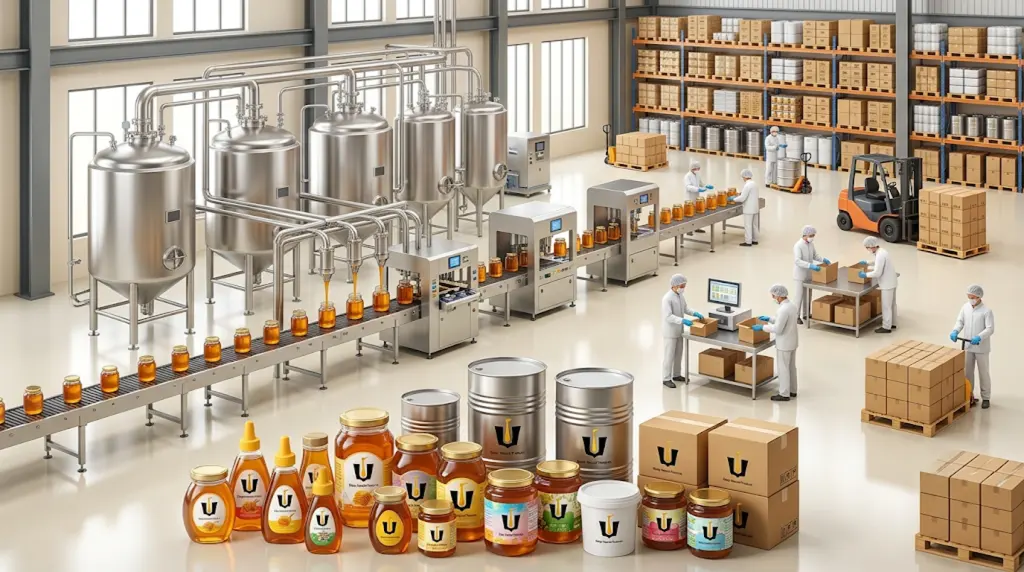
Honey sourcing and procurement.
Raw honey inspection.
Processing and filtration.
Quality testing.
Packaging and labelling.
Bulk production.
Finished-product preparation.
The exact responsibilities depend on the agreement between the brand and manufacturer.
Contract Manufacturing vs. Private Label Manufacturing
Although these terms are sometimes used interchangeably, they can describe different business arrangements.
Contract manufacturing generally involves producing products according to a brand's specifications or requirements.
Private-label manufacturing involves producing products that are marketed and sold under the buyer's own brand name.
Both approaches can help food businesses expand their product portfolios without building their own manufacturing infrastructure.
A business does not need to manage every production activity internally to develop a successful honey product.
By working with an established manufacturer, brands can focus more resources on customer acquisition, distribution, market research, and business development.
1. Reduce Investment in Manufacturing Infrastructure
One of the biggest challenges for a growing food brand is the cost of establishing production facilities.
Honey manufacturing requires suitable processing equipment, storage arrangements, packaging facilities, trained personnel, and quality-control procedures.
Setting up these operations independently can require substantial capital.
Contract manufacturing provides an alternative.
Avoid the Cost of Building Your Own Facility
Businesses can work with an existing manufacturer instead of purchasing equipment and establishing a complete production setup.
This can reduce the initial investment required to introduce a honey product line.
Companies can allocate more resources towards:
Brand development.
Product marketing.
Retail distribution.
Customer acquisition.
Market expansion.
Business operations.
Improve Financial Flexibility
For startups and small food businesses, managing cash flow is important.
Avoiding large infrastructure investments can help businesses maintain greater financial flexibility.
Instead of committing significant capital to production facilities, they can plan their manufacturing expenses according to business requirements and expected demand.
. Expand Your Product Range Without Managing Production Yourself
Food brands often want to introduce multiple products to attract different customer segments.
In the honey category, opportunities may include different honey varieties, packaging formats, and product quantities.
However, expanding a product range can become complicated when every new product requires separate production arrangements.
Working with a capable Honey Manufacturer India can make product expansion more manageable.
Introduce Different Honey Product Categories
Depending on sourcing availability and manufacturing capabilities, businesses may explore:
Regular honey products.
Different floral-source honey varieties.
Bulk honey for food manufacturing.
Retail-ready honey packaging.
Private-label honey products.
Each product should have clearly defined specifications and appropriate quality checks.
Serve Different Customer Segments
A food brand may want to target households, supermarkets, hotels, restaurants, or institutional buyers.
Each segment can have different purchasing preferences.
For example, retail customers may prefer smaller consumer-friendly packs, while food manufacturers may require larger quantities for commercial applications.
Working with a suitable manufacturing partner helps brands explore these opportunities without independently managing every production process.
3. Maintain Consistent Product Quality
Product quality directly influences customer satisfaction and brand reputation.
When consumers purchase honey repeatedly, they expect a consistent experience.
Differences in taste, colour, texture, moisture content, and other characteristics can affect how customers perceive a product.
For this reason, quality management should be an important part of every contract manufacturing arrangement.
Establish Clear Product Specifications
Before production begins, the brand and manufacturer should agree on the product requirements.
These may include:
Honey variety and sourcing preferences.
Required product characteristics.
Moisture content specifications.
Processing and filtration requirements.
Packaging materials.
Labelling information.
Applicable testing requirements.
Clear specifications help both parties understand the expected product quality.
Follow Proper Quality-Control Procedures
Quality control should cover multiple stages of production.
Raw honey should be inspected before processing. Appropriate tests should be conducted to verify relevant quality and safety parameters.
Finished products should also be checked before packaging and dispatch.
A professional Honey Manufacturer India should maintain suitable quality-control procedures and provide relevant documentation according to the product and buyer requirements.
This helps brands maintain consistent standards as their order volumes increase.
4. Scale Production According to Market Demand
A food brand's production requirements can change as the business grows.
A startup may initially require limited quantities to test its products in the market.
After establishing demand, the same business may need larger production volumes to serve distributors, retailers, and new geographical markets.
Managing these changes independently can be challenging.
Start With Practical Production Planning
Before placing an order, brands should discuss minimum order quantities, production capacity, packaging requirements, and delivery timelines.
This helps businesses plan their initial launch without committing to unrealistic production volumes.
Increase Production as Your Brand Grows
Once demand becomes more predictable, brands can discuss larger and more regular production orders.
A suitable manufacturing partner can help coordinate production according to confirmed requirements and available capacity.
However, scaling should always be planned around actual manufacturing capabilities, raw material availability, and quality requirements.
Improve Inventory Management
Production planning also influences inventory management.
Businesses need to maintain sufficient stock to meet customer demand without holding excessive inventory.
Working with an experienced bulk honey manufacturing partner can help brands coordinate their purchasing and production schedules more effectively.
5. Access Flexible Packaging and Private-Label Solutions
Packaging plays an important role in how consumers recognise and purchase food products.
For honey brands, packaging must also protect the product and support safe storage and transportation.
Contract manufacturing can help businesses explore different packaging formats without establishing their own packaging infrastructure.
Choose Packaging Based on Your Target Market
Different customers require different packaging solutions.
Common commercial honey packaging formats include:
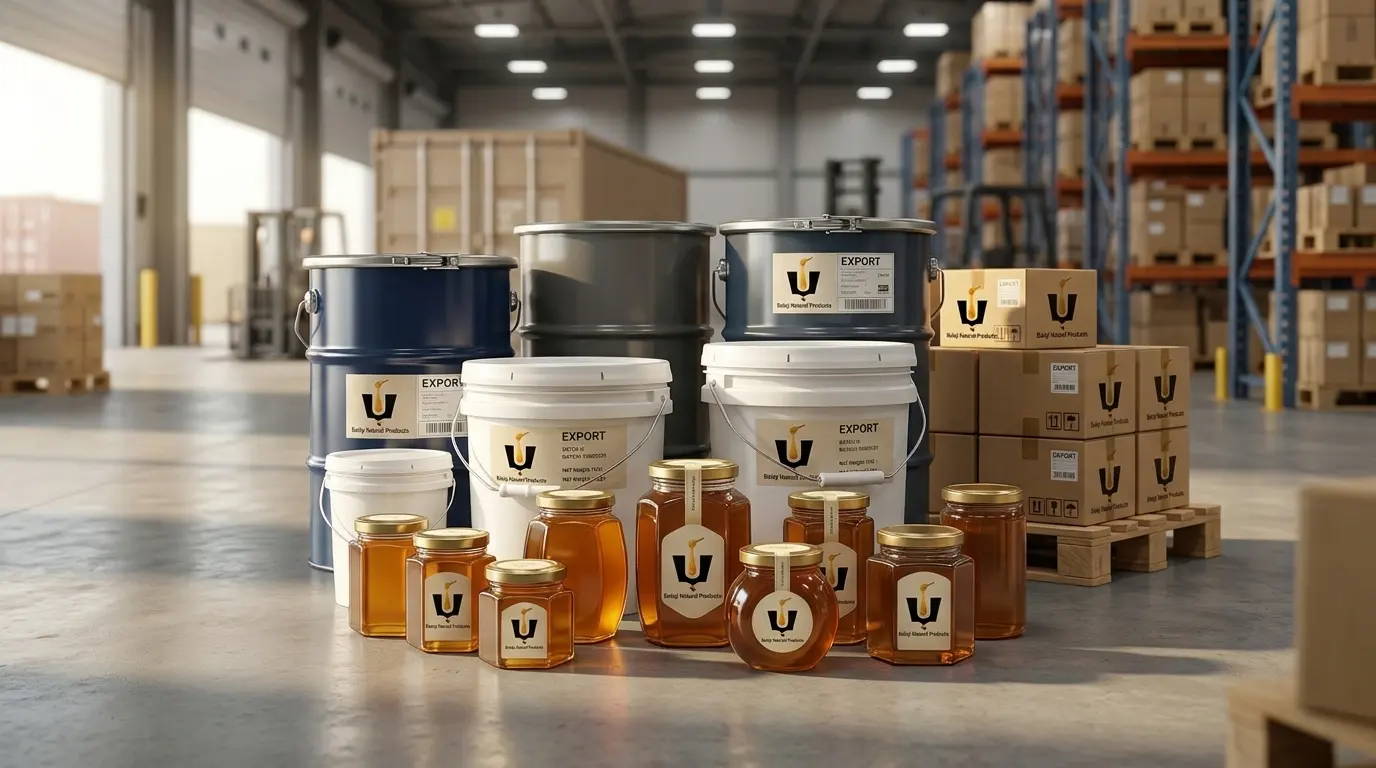
Food-grade buckets.
Plastic or glass jars.
Industrial cans.
Bulk containers.
Epoxy-coated drums where suitable.
The choice depends on the intended application, order quantity, transportation conditions, and applicable food-contact requirements.
Build Your Own Private-Label Honey Brand
Private-label manufacturing allows retailers, distributors, and food businesses to introduce honey products under their own brand identity.
The buyer can work with the manufacturer to discuss product specifications, packaging preferences, labelling requirements, and production quantities.
This can be particularly useful for businesses that already have an established customer base but want to expand into the honey category.
A reliable Honey Manufacturer India can support this process through coordinated manufacturing and packaging services.
6. Improve Supply-Chain Efficiency and Business Operations
Managing multiple suppliers and production activities can create operational difficulties.
Businesses may need to coordinate raw material sourcing, processing, packaging, testing, storage, and transportation.
When these activities are not properly planned, delays and communication gaps can affect product availability.
Contract manufacturing can simplify coordination by providing an established production partner.
Reduce Operational Complexity
Instead of independently managing every manufacturing activity, brands can coordinate their requirements through a single manufacturing relationship.
This can simplify communication and make production planning more organised.
Improve Order Coordination
Brands should establish clear processes for:
Purchase order confirmation.
Product specification approval.
Production scheduling.
Quality inspection.
Packaging approval.
Dispatch planning.
Delivery coordination.
Regular communication helps both parties identify potential issues before they affect order fulfilment.
Build a More Predictable Supply Process
Businesses should also discuss raw honey availability, seasonal considerations, and expected production timelines.
A dependable manufacturing arrangement can help brands plan repeat orders and maintain better inventory visibility.
7. Focus More on Branding, Marketing, and Market Expansion
One of the biggest advantages of outsourcing manufacturing is the ability to concentrate on activities that directly support business growth.
Producing a good honey product is important, but consumers also need to discover, recognise, and trust the brand.
Contract manufacturing allows businesses to dedicate more attention to building these customer relationships.
Develop a Strong Brand Identity
Food brands can invest in:
Professional packaging design.
Brand positioning.
Product photography.
Digital marketing.
Retail visibility.
Customer education.
A clear brand identity helps differentiate products in a competitive market.
Expand Distribution Channels
Once the product is ready, businesses can explore different sales channels.
These may include supermarkets, grocery stores, online marketplaces, distributors, hotels, restaurants, and institutional buyers.
Each channel has different requirements related to packaging, pricing, order quantities, and delivery.
Enter New Markets With Better Preparation
Businesses planning to expand geographically should evaluate customer preferences, product regulations, labelling requirements, and distribution opportunities.
Manufacturing partners can support production planning, while brands focus on understanding their target markets.
This division of responsibilities can make expansion more manageable.
How to Choose the Right Contract Honey Manufacturing Partner
Selecting a manufacturing partner is an important decision.
The quality of the relationship can influence product consistency, supply reliability, customer satisfaction, and long-term business performance.
Before finalising an agreement, food brands should evaluate several factors.
1. Manufacturing experience: Understand the manufacturer's experience in honey sourcing, processing, packaging, and bulk supply.
. Quality-control systems: Ask about raw material inspection, testing procedures, product specifications, and quality documentation.
3. Production capabilities: Check whether the manufacturer can support your current requirements and potential future demand.
4. Packaging flexibility: Discuss available packaging formats and private-label requirements.
5. Transparency: Ensure that pricing, order quantities, responsibilities, and production timelines are clearly communicated.
6. Compliance: Verify applicable food safety, labelling, and manufacturing requirements.
7. Communication: Choose a partner who provides timely updates and responds professionally to business enquiries.
Taking time to evaluate these areas can help businesses establish a stronger manufacturing relationship.
Why Balaji Natural Products Can Be a Partner for Bulk and Private-Label Honey Requirements
Balaji Natural Products brings more than 20 years of experience in the honey industry, with a focus on bulk honey supply and private-label business requirements.
For food brands, wholesalers, distributors, and businesses exploring honey products, having a manufacturing and supply partner who understands commercial requirements can be valuable.
The company works with bulk and private-label honey requirements and offers packaging options such as buckets, cans, and epoxy-coated drums, depending on the order and product specifications.
Its experience supports businesses looking to coordinate honey sourcing, packaging preferences, and bulk supply requirements.
Whether a business is exploring a new honey product line or planning to expand its existing operations, discussing the requirements with an experienced supplier can help establish a suitable production arrangement.
Explore more: [Internal Link to Relevant Balaji Natural Honey Page – Bulk Honey Supply / Private Label Honey]
For food brands planning to introduce their own honey products, the next step is to discuss product specifications, expected quantities, packaging, and supply requirements.
Important Considerations Before Starting Contract Honey Manufacturing
Although contract manufacturing offers several advantages, businesses should plan the arrangement carefully.
Before beginning production, both parties should establish a clear understanding of their responsibilities.
Some important considerations include:
Product ownership: Clarify who owns the brand, product formulation, and approved specifications.
Minimum order quantity: Understand the minimum production commitment.
Pricing: Confirm manufacturing costs, packaging expenses, and applicable additional charges.
Quality responsibility: Define inspection procedures and acceptable product standards.
Packaging approval: Finalise packaging materials and label designs before production.
Delivery timelines: Agree on realistic production and dispatch schedules.
Confidentiality: Establish suitable protection for commercial information and business requirements.
A written agreement covering these areas can help avoid misunderstandings and support a more professional partnership.
Businesses should also ensure that their products meet applicable food safety and regulatory requirements.
External resource: Food Safety and Standards Authority of India (FSSAI)
Conclusion: Build Your Honey Brand With the Right Manufacturing Partner
Expanding a food brand into the honey market does not necessarily require investing in an independent manufacturing facility.
Contract manufacturing provides an opportunity to access established production capabilities, explore private-label solutions, maintain product specifications, and scale operations according to market demand.
By choosing the right Honey Manufacturer India, businesses can reduce manufacturing complexity and focus more on branding, marketing, distribution, and customer relationships.
However, long-term success depends on selecting a partner who understands product quality, packaging requirements, production planning, and reliable business coordination.
For startups, established food brands, retailers, and distributors, contract honey manufacturing can be a practical way to explore new opportunities and expand their product portfolios.
Looking to expand your food brand with bulk or private-label honey?
Connect with Balaji Natural Products to discuss your honey sourcing, bulk supply, packaging, and private-label requirements.